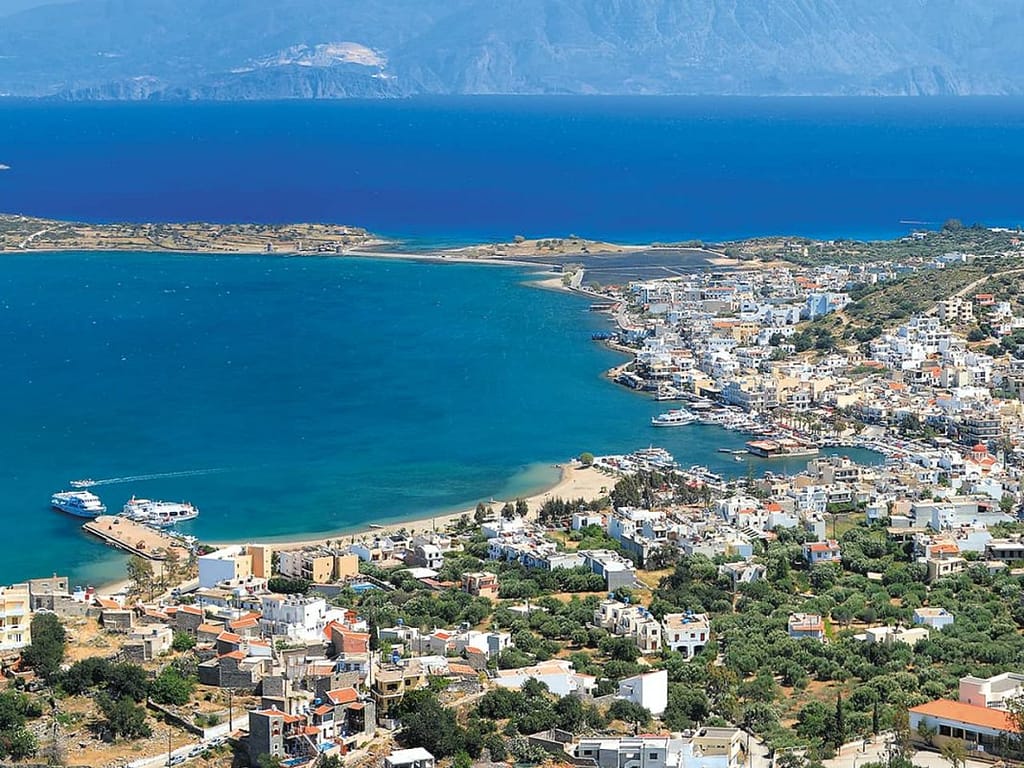
The implementation of the Schisma Elounda bypass road, a project of vital and emblematic importance for tourism but also for the daily life of residents in Lassithi, was the focus of the work of the 5th meeting of the Monitoring Committee of the Regional Program “CRETE 2021-2027”.
This particularly crucial meeting, which was hosted at the Porto Elounda conference center, came to confirm in practice that this leading road project is finally on track for implementation, satisfying a decades-long demand of the local community.
From the podium of the meeting in Porto Elounda, the Governor of Crete Stavros Arnaoutakis expressed his absolute satisfaction with the progress of the new Program, which is now in full swing. As he characteristically emphasized, the first tangible results of the targeted interventions are already visible to citizens, with the overall development plan taking shape. It is indicative of the rapid pace of implementation that more than 30 projects have already been completed and successfully delivered to the local communities of Crete.
The Elounda road, however, is not the only big bet. The current “CRETE 2021-2027” program has a total of 565 million euros, with the main objective of supporting development interventions that decisively strengthen the social and economic cohesion of our island.
Projects in Lassithi and Crete
Along with the Elounda bypass, other emblematic interventions in Lassithi and throughout Crete are also on track for implementation, such as the Biologikos and Networks in Makry Gialos, the European School and the Neoria in Heraklion, the regeneration of the Koum Kapi area in Chania, the historic “Mother” Nursery School, as well as the 4th Kindergarten in Rethymno. The renewed program focuses on cutting-edge issues, prioritizing the fight against climate change, integrated spatial development, the strengthening of innovation, the guarantee for the child and the substantial social inclusion of vulnerable groups.
The Governor also made special mention of the previous program “Crete 2014-2020”, which, as announced, closed with full absorption of its resources and an extremely positive development footprint. The available resources were effectively utilized, transformed into substantive projects and the interventions improved everyday life. This success, in fact, was quantified and presented in detail by an external evaluator, confirming that a strong basis of credibility was created for the new interventions.
Of particular journalistic interest is the partial revision of the current NSRF, which was imposed by global developments with the aim of reducing the EU’s dependence on third countries. Now, the program includes critical actions for water resilience, affordable housing, upgrading skills in civil protection and the STEP digital platform. At the same time, the Integrated Spatial Investment (ISI) is bearing enormous fruit in culture, contributing decisively to the inclusion of six Minoan Palaces in the UNESCO list, with eight related projects already in the tendering phase. The business interest is also enormous: the “GREEN MORE” action gathered 222 applications amounting to 28 million euros (with an initial budget of just 5 million euros), while at the same time 70 social enterprises are being financed with 4.7 million euros.
Source: Michalis Atsalakis for Anatolh.com